
When I first read Call Me By Your Name I was nineteen years old, living with my grandparents, and smack-dab in the middle of the loneliest era of my life. It was the second year of the pandemic. I occupied these stretches of solitude with TikTok, ordering matcha lattes on the daily, and crossing books off my TBR list like my mental state depended on it. That was my life then: a sad cycle of media consumption and uninterrupted bedrot. André Aciman’s 2007 novel (source material for the 2017 film adaptation of the same name) had been Book #14 that summer. It was also the most beautiful, heart-wrenching piece of art I had consumed in many months. Prior to reading it, I had only watched parts of the film, and one of its themes — Miroirs III. Une barque s’ur l’ocean — had been my top Spotify song that year. But the farthest I had ever gotten book-wise was chapter two. Much of my Call Me By Your Name knowledge, then, had been graciously provided by the Internet: stills of lush Mediterranean landscapes on Pinterest; edits of Timothée Chalamet in a blue shirt on a dance floor; friends sharing snippets of dialogue online; maybe a tweet or two about a peach. I knew it was a love story (of sorts), I knew it was controversial, and I knew it was a sobfest. I didn’t think that it was the kind of book that could change my life, and definitely not for the reasons it did.
Obligatory recap, for those of us who haven’t thought of Call Me By Your Name in years: somewhere in 1980s northern Italy, seventeen-year-old Italian-American Elio meets his father’s American intern, Oliver, who they are hosting at his family’s villa for the summer. What begins as a steadfast companionship (shared rooms, shared dinner tables, shared bike rides through country and city streets) eventually blossoms into something more: pining and passion and eventually, pure devastation. It’s a stunning novel, with imagery so gorgeous and delectable I wanted to leap into the pages and taste it. You sign up for romance and end up feeling like a voyeur of sorts, gazing into the forbidden soft-edged haze of someone else’s treasured memory.
The effect is trancelike, and near impossible to look away from. As their summer together began to inch towards its deadline, I felt the creeping dread of what I knew was coming — still, one can’t help but hold out and hope. The inevitable end was devastating, not just because their relationship was doomed, but because the book dives into what the film doesn’t touch: their second meeting years in the future. They are fifteen years older. Oliver is married and has a family. His eldest son, he says, is almost as old as Elio had been. It’s a direct stab to the heart. We, like Elio, are still at the restaurant, still unable to move on from what a few pages ago felt immortal. But what was everything to him (and us) is something Oliver can now barely acknowledge, and we can’t even blame him. It’s an excruciating testament to the reality of the passage of time.
I remember reading the book’s final words and, through the tears, immediately being hit by a thought. I made a beeline for my Notes app soon after and wrote:
I don’t think I’ve ever been a hopeless romantic. A romantic, sure, but never a hopeless one. I’ve never experienced love the way Elio has, the dizzying, bare-your-soul-and-everything kind, the kind that leaves you wishful and wanting even when you’re grown up and all these decades have passed. I’ve never been so in love it made me physically sick to the stomach, so heartbroken I wanted to die. I used to be proud of the fact, that no one could ever lord their indifference over me, because I was always capable of beating them to the punch.
Now that I’ve lived two full decades on this earth, I can’t say I share the same sentiment. All this time protecting my heart, and what do I have to show for it? It’s a burden I carry — the weight of all the life I’ve yet to fully live. The weight of the life I am still barely living. And with this cloud of uncertainty hanging over us everyday, it’s only just dawned on me that I might never get the chance to.
I continued:
Reading this book when I did was a wake-up call. It made me mourn my passion, my former tenacity, and forced me to confront how my current life pales in comparison. I turned every page of their doomed romance and didn’t think: This is heartbreaking. I thought: This is what life is supposed to feel like. This is what I’m missing.
Is it better to have loved and lost than to never have loved at all? I don’t know. I’m still only twenty-two, and while I’ve lived so much more life and am far from the person I was when I first read it, I still can’t tell you. I might feel one way now, but two decades and maybe a couple more heartbreaks down the line, I might lean towards the other. Maybe when I’m forty I’ll let you know.
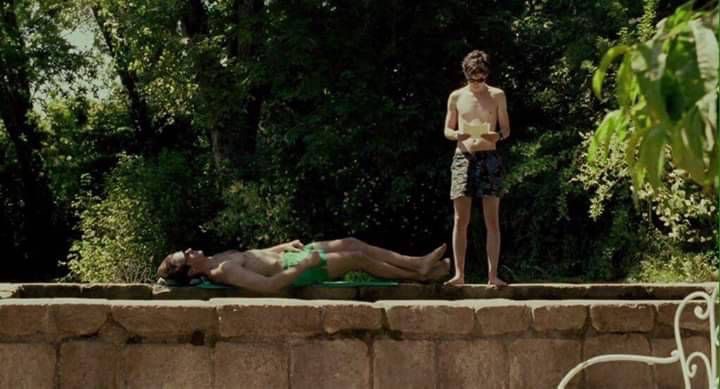
“We rip out so much of ourselves to be cured of things faster than we should that we go bankrupt by the age of thirty and have less to offer each time we start with someone new. But to feel nothing so as not to feel anything — what a waste!”
I love that line: “But to feel nothing so as not to feel anything — what a waste!” It’s delivered by Elio’s father when Oliver has returned to America — a goodbye, by the way, that we don’t get to see, almost as though this is their moment and theirs alone — and Elio is reeling from the loss. Elio’s father is possibly my favorite character in the whole novel, despite his lack of actual presence in the story, because of all the golden wisdom he spouts. Soon after he gives us this gem:
“Most of us can’t help but live as though we’ve got two lives to live, one is the mockup, the other the finished version, and then there are all those versions in between. But there’s only one, and before you know it, your heart is worn out, and, as for your body, there comes a point when no one looks at it, much less wants to come near it. Right now there’s sorrow. I don’t envy the pain. But I envy you the pain.”
“I don’t envy the pain. But I envy you the pain.” It’s such a beautiful sentiment. This moment that Elio and his father share is possibly my favorite scene, apart from his and Oliver’s trip to Rome, because of the way he comforts Elio by basically telling him, You don’t have to talk to me about this, but I’m here, the door is open, and in the mean time let me leave you with what I know. And he knows so much. Even Elio is left wondering how.
I haven’t stopped thinking about this quote for years, and it’s one of the main reasons why Call Me By Your Name means so much to me. The impact that this one line alone has had on the way I now look at life and love is immeasurable, and I thank André Aciman for it.
“There is a law somewhere that says that when one person is thoroughly smitten with the other, the other must unavoidably be smitten as well. Amor ch’a null’amato amar perdona. Love, which exempts no one who’s loved from loving, Francesca’s words in the Inferno. Just wait and be hopeful. I was hopeful, though perhaps this was what I had wanted all along. To wait forever.”
Is it better to speak or to die? There is something so raw and vulnerable about Elio’s pining, even before he and Oliver are made aware of their shared feelings. The book is packed with this theme of longing, and being in that tortured space of inability to voice it. Elio thinks this as he realizes that he is essentially gone for, and it’s hopeless — Oliver is leaving. And he continues: “As I sat there working on transcriptions at my round table in the morning, what I would have settled for was not his friendship, not anything. Just to look up and find him there, suntan lotion, straw hat, red bathing suit, lemonade. To look up and find you there, Oliver. For the day will come soon enough when I’ll look up and you’ll no longer be there.” It makes me want to cry, the idea of being so in love that you would have settled for something as simple as their company. I won’t ask anything else from you. Just be here.
“Did I want him to act? Or would I prefer a lifetime of longing provided we both kept this little Ping-Pong game going: not knowing, not-not-knowing, not-not-not-knowing? Just be quiet, say nothing, and if you can’t say “yes,” don’t say “no,” say “later.” Is this why people say “maybe” when they mean “yes,” but hope you’ll think it’s “no” when all they really mean is, Please, just ask me once more, and once more after that?”
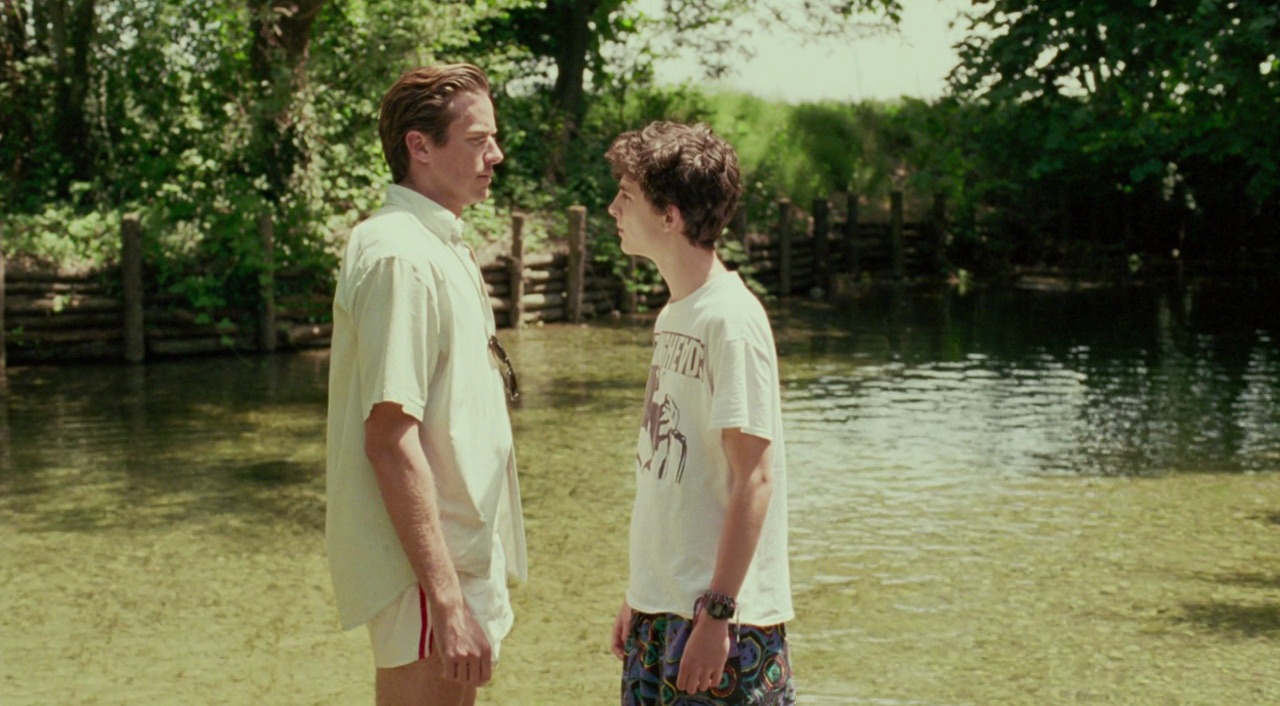
I like to think I first read Call Me By Your Name at the perfect time. I wouldn’t have appreciated it enough had I decided to pick it up earlier, and I wouldn’t have made the same decisions I did over the last two years if I only discovered it today. Still, I do think that it’s one of those precious stories that changes with time, as you age and experience more shades of life. I know I’m due for a reread for that reason alone. And I’m looking forward to it, because my fondness for this story and Elio’s plight has only grown — it’ll be like catching up with an old friend, who I get to understand so much more now with my new maturity and growth. Unlike Elio and Oliver though, this reunion will be a happy one.
If, by any chance, you have yet to read the book or see the adaptation and are planning to do both, I suggest taking the route I did: film first, book after. It may be a matter of personal preference, but I loved experiencing Luca Guadagnino’s vision and then following up with the deeper layers that couldn’t be translated from the source material. If, like me, you have done both but it’s been some time, then take this as a sign to return to the Italian countryside. Revisit the pleasure and the sorrow and the intensity of everything in between. Call Me By Your Name is timeless like that.
We had found the stars, you and I. And this is given once only.
 Lingering in Doorways
Leave a comment